• Home
  • About XAO
    • Brief Introduction
    • Directors
    • Organization
  • Research
    • Research FIELDS
    • Observation Stations
    • Facilities
    • Laboratories
    • Annual Reports
  • Scientist
    • Professors
    • Associate Professors
  • Cooperation
  • Education
    • Graduate Education
    • Post-Doctor Fellow
    • Supervisors
  • QTT Project
    • About QTT
    • Events
  • Join Us
  • Research News
  • 中
  • Home
  • About XAO
    • Brief Introduction
    • Directors
    • Organization
  • Research
    • Research FIELDS
    • Observation Stations
    • Facilities
    • Laboratories
    • Annual Reports
  • Scientist
    • Professors
    • Associate Professors
  • Cooperation
  • Education
    • Graduate Education
    • Post-Doctor Fellow
    • Supervisors
  • QTT Project
    • About QTT
    • Events
  • Join Us
  • HomeResearch News
  • Research News
    • Jul 01, 2026
      New VLBI Observation Reveals a Rare, Compact, Fading Jet in an Intermediate-Mass Black Hole Merger System
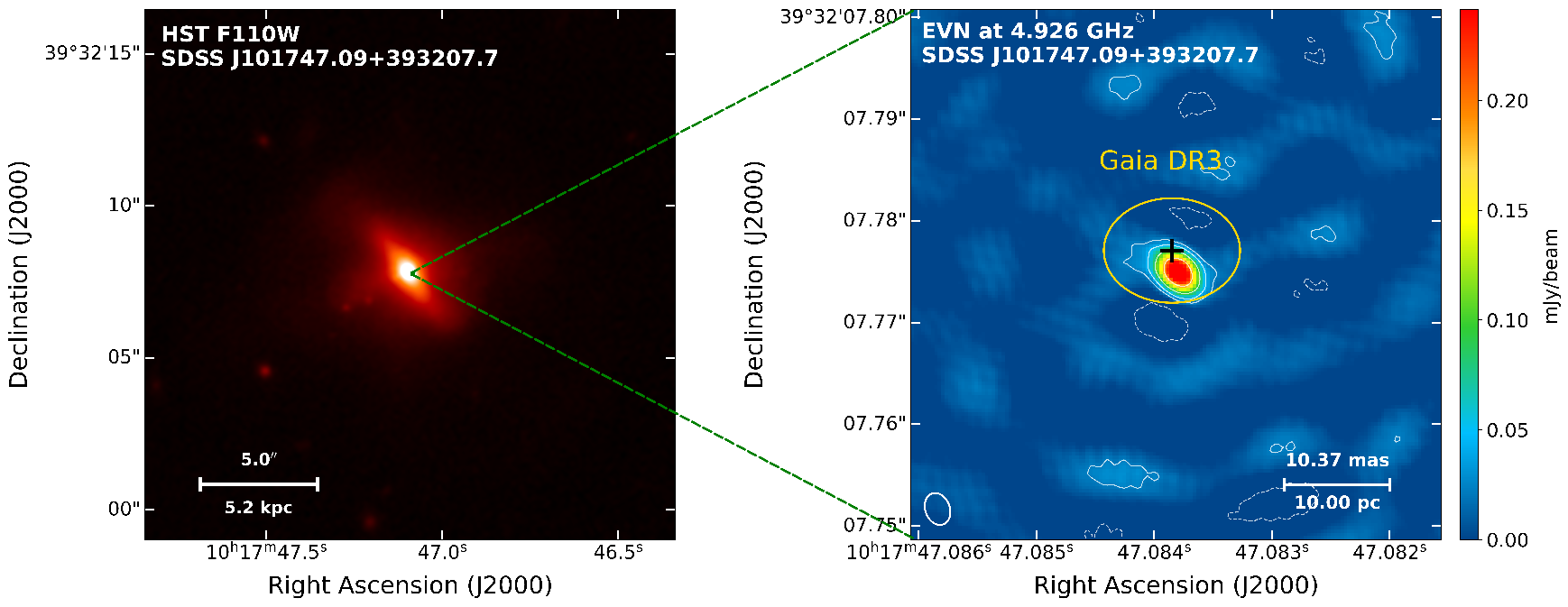
      The researchers conducted a dedicated study of the nearby dwarf galaxy merger system SDSS J101747.09+393207.7 (also known as RGG66), and providing new clues for understanding how galaxy mergers trigger black hole accretion and black hole...Intermediate-mass black holes (IMBHs, ~10² - 10⁶ M☉) bridge the gap between stellar-mass and supermassive black holes. They are crucial for understanding key scientific questions, such as the growth of black hole mass and the co-evolu...

    • Jun 30, 2026
      Cosmic Duet:When a Pulsating Star Meets Tidal Locking
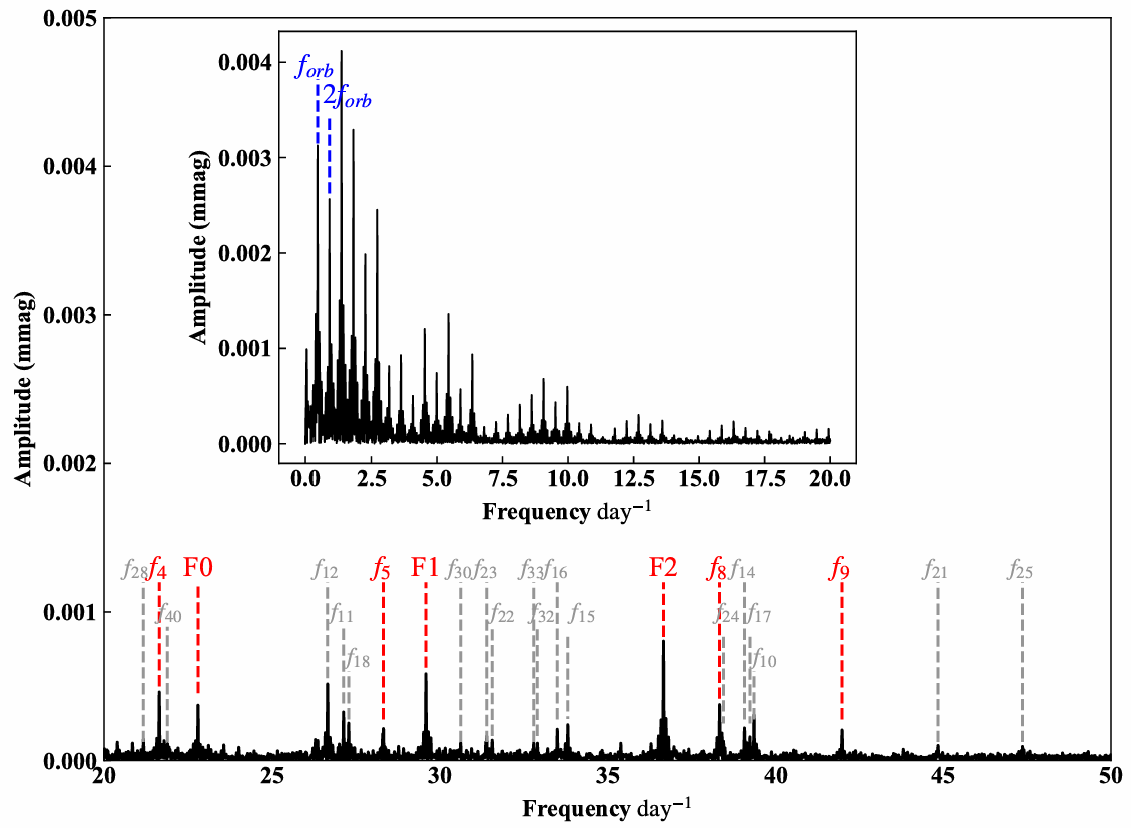
      The researchers has unveiled the secrets of this system using data from NASA’s TESS space telescope and ground-based observations.About 467 light-years away, a stellar system designated TIC 197757000 is performing a cosmic dance—two stars orbiting each other every 2.2 days. Now, a team led by Ph.D. student Shahidin Yaqup and his supervisor Prof. Ali Esamdin at the...
    • Jun 26, 2026
      H2CO Reveals the Dynamical Characteristics of Early Star Formation in Planck Cold Cores
      The researchers conducted an observational study of formaldehyde (H2CO) absorption lines at the 6 cm band toward 73 Planck cold cores using the Nanshan 26-meter radio telescope.Recently, Yernar Imanaly, a doctoral student in the star formation and evolution group at the Xinjiang Astronomical Observatory of the Chinese Academy of Sciences, conducted an observational study of formaldehyde (H2CO) absorption lines ...
    • Jun 24, 2026
      A New Study Uncovers Unique Radiation Secrets of a Pulsar
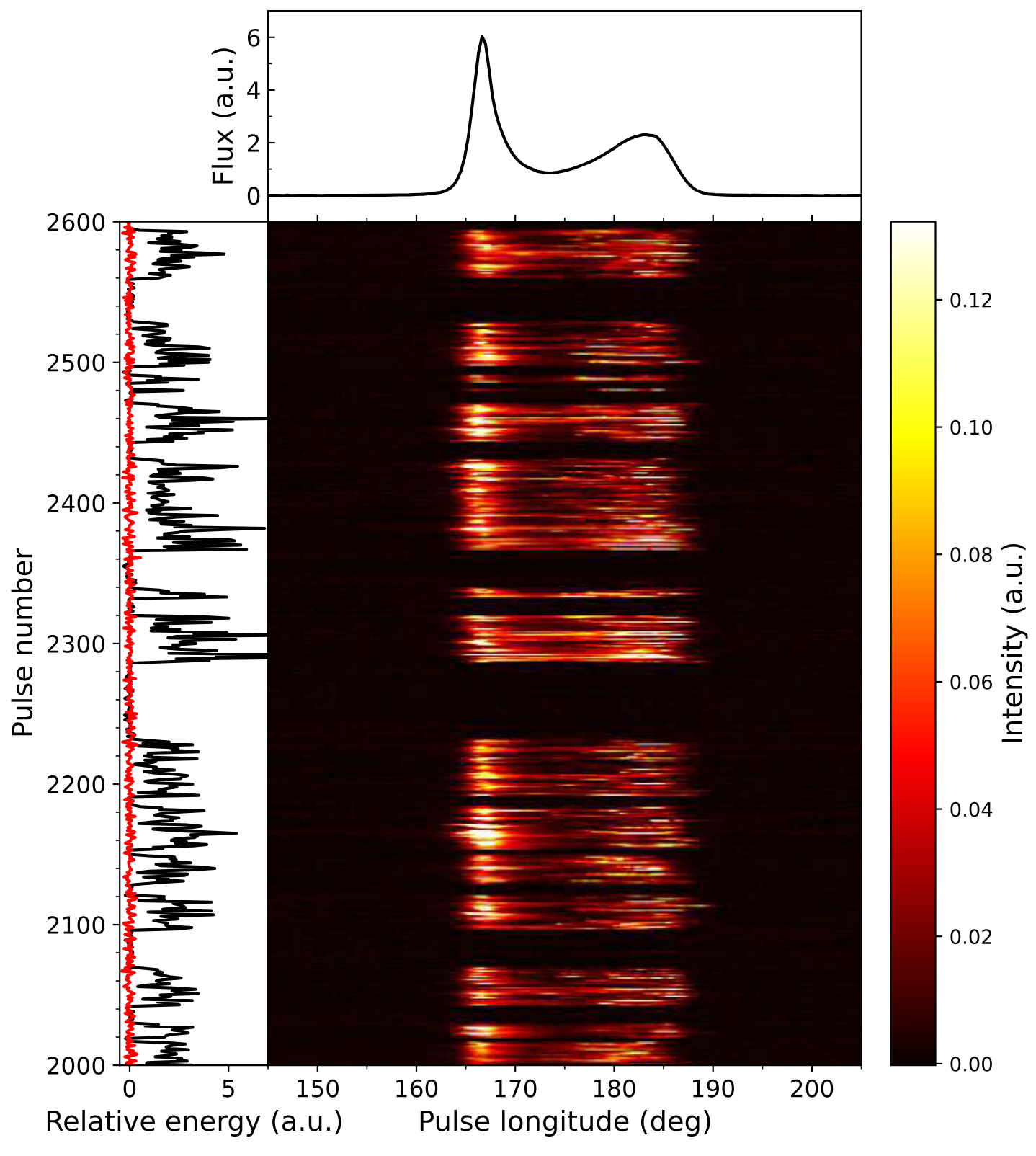
      The resaercher carried out comprehensive observational analysis of pulsar PSR B0823+26 using China’s Five-hundred-meter Aperture Spherical radio Telescope (FAST). Pulsars are rapidly spinning cosmic lighthouses, and some of them have two emission phases: an active bright state and a quiescent faint state. Signals during dormancy are extremely weak, making detailed observations difficult for a long...
    • Jun 17, 2026
      A Star Feeds Its Companion: Astronomers Reveal the True Face of Its Accretion Disk
      The researchers have constructed the first comprehensive profile of this long-period system (orbital period approximately 21.6 days), and discovered that the transferred material does not directly impact the primary star. Instead, it for...There exists a unique class of binary systems known as Algol-type binaries. These systems consist of a hot primary star and a cooler companion. The companion, having expanded to fill its Roche lobe, transfers material via a steady stream...
    • Jun 16, 2026
      Mildly Recycled Pulsars Trace Two Evolutionary Pathways in Intermediate-Mass Binaries
      The researchers conducted long-term follow-up timing observations of two newly discovered binary pulsars, PSRs J1929+4105 and J2359+4239, and obtained phase-connected timing solutions for the first time. The study reveals that both pulsa...Using the Five-hundred-meter Aperture Spherical radio Telescope (FAST), the researchers from Xinjiang Astronomical Observatory, Chinese Academy of Sciences, conducted long-term follow-up timing observations of two newly discovered binary...
    12345Last
    View More
    Copyright © Xinjiang Astronomical Observatory,新ICP备2025020307号,
    Address:150, Science 1-Street, Urumqi, Xinjiang 830011, China
    Tel:0991-3689373Fax:0991-3838628